The modern morning ritual has become something of a laboratory experiment: and honestly, your kitchen counter probably looks like it. Between the frothers, the powders, the tinctures, and the heavy bags of "superfood" additives, we’ve collectively turned our first cup of the day into a complex chemistry project. We’re all chasing that elusive cognitive edge, trying to bridge the gap between "barely conscious" and "ready to conquer the boardroom" without the inevitable 11:00 AM jitters.
This brings us to the Great Caffeine Debate of the biohacking era: Do you fix your coffee with a functional creamer, or do you start with a coffee that is already functionally infused?
It sounds like a minor distinction, but from a physiological standpoint: and certainly from a "how much time do I have before my first Zoom call" standpoint: the difference is profound. Here’s the thing: not all delivery systems are created equal. While both options promise to turn your morning brew into a brain-boosting elixir, one is a cluttered DIY project, and the other is a precision-engineered solution.
The Functional Creamer Craze: The Good, the Bad, and the Clumpy
If you’ve spent any time on wellness TikTok, you’ve seen them: the functional creamers. These powders often boast a laundry list of trendy ingredients: MCT oil for mental clarity, collagen peptides for skin and joints, and perhaps a dash of turmeric or cinnamon for anti-inflammatory vibes.
On paper, they’re great. They offer a way to "upgrade" a standard cup of grocery-store coffee into something that feels like it belongs in a high-end wellness clinic. But if we pull back the curtain on the average functional creamer, we often find a few things that don’t quite align with a cleaner morning routine.
First, there’s the filler problem. To make these powders shelf-stable and "scoopable," many brands rely on maltodextrin, gums (like guar or xanthan), and silica. You might be getting your Lion’s Mane, but you’re also getting a side of industrial thickeners that can wreak havoc on a sensitive gut. Then there’s the bioavailability issue: if your body has to fight through a sludge of poorly sourced fats and artificial sweeteners just to find the active ingredients, how much of that "biohack" is actually reaching your brain?

Enter Infused Coffee: The Precision Biohack
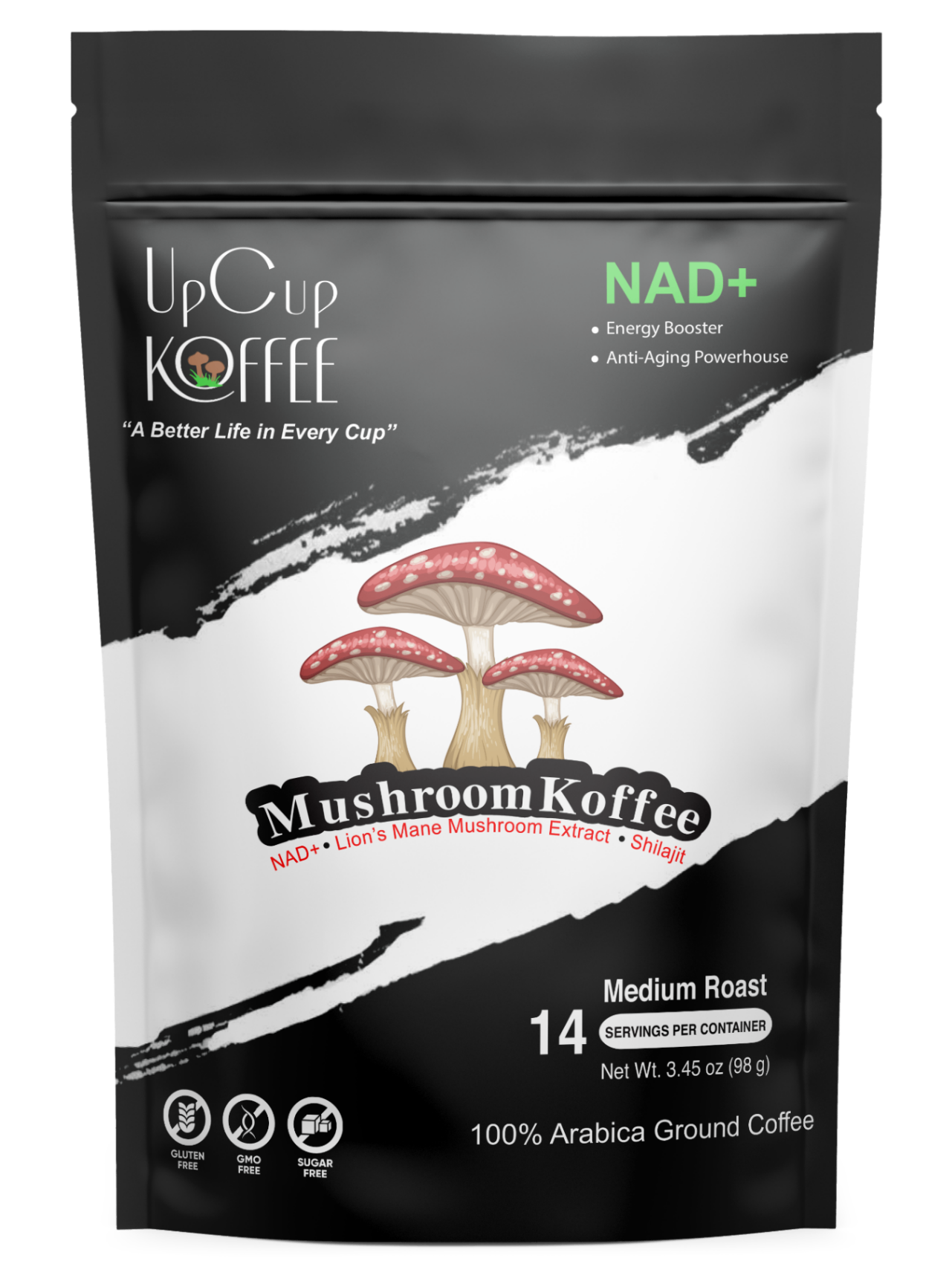
Now, let's look at the alternative: infused coffee. Specifically, the kind of approach we took when developing UpCup Koffee.
Instead of dumping a pile of powder on top of your coffee and hoping for the best, infusion happens at the source. It’s about integrating functional compounds directly into the coffee grounds. This isn't just a matter of convenience; it’s about molecular synergy. When you brew a coffee that has been precision-infused with ingredients like NAD+, Lion’s Mane, and Shilajit, the hot water acts as the ultimate solvent, extracting the coffee’s natural antioxidants and the added functional compounds simultaneously—creating what we like to call Premium Coffee with Functional Benefits.
This is what we call the Bioavailability Blueprint. By infusing the coffee itself, we ensure that the active ingredients are evenly distributed and ready for absorption the moment they hit your system. No clumping, no oily slick on top of your mug, and no fillers: just pure, high-altitude Arabica coffee and pharmaceutical-grade functional support.
The Science of the "UpCup" Ingredients
When my fellow founders and I sat down to design UpCup, we weren't looking for "trendy" ingredients: we were looking for results. We wanted a cup that offered more than just a temporary caffeine spike. We wanted sustained focus and cellular support.
1. Lion’s Mane (Hericium erinaceus)
This isn’t just your average mushroom. Lion’s Mane contains hericenones and erinacines, compounds that have been shown in human clinical trials to stimulate Nerve Growth Factor (NGF). This is crucial for neuroplasticity: the brain’s ability to reorganize itself and form new neural connections. While a creamer might give you a dusty dose of mushroom powder, UpCup uses a concentrated extract designed to be water-soluble and highly bioavailable.
2. NAD+ (Nicotinamide Adenine Dinucleotide)
NAD+ is the "holy grail" of longevity research. It’s a coenzyme found in all living cells and is essential for energy metabolism and DNA repair. As we age, our NAD+ levels naturally decline: which is why we often feel that mid-afternoon slump more acutely. By including NAD+ in the morning ritual, we’re supporting the body’s cellular batteries right from the start.
3. Shilajit
Think of Shilajit as the ultimate "amplifier." This ancient mineral resin is packed with fulvic acid, which has been shown to improve the permeability of cell membranes. In simpler terms, Shilajit helps your body actually use the nutrients you’re consuming. It’s the "missing link" that many functional creamers lack. You can read more about why we consider it a mineral powerhouse here.

Why "Clean" Matters for Your Brain
Many people don't realize that the "crash" they associate with coffee often isn't the caffeine's fault: it's the additives. Traditional creamers (and even some "functional" ones) are loaded with sugar or sugar alcohols that trigger an insulin spike. When your blood sugar inevitably drops an hour later, your brain feels like it’s running through mud.
By choosing an infused coffee like UpCup, you’re keeping the ritual sugar-free and filler-free. You’re getting the cognitive benefits of functional ingredients without the metabolic baggage. This is the difference between a "dirty" biohack and a clean one. When your morning fuel is clean, your focus is sustained, and you bypass that 2:00 PM wall that most people consider a "normal" part of the day. For a deeper dive into this, check out our post on why your brain needs functional fuel.
The Lifestyle Factor: Complexity vs. Simplicity
Let’s be honest: biohacking can be exhausting. If your morning routine requires fifteen different steps and a specialized blender, you’re probably not going to stick with it when life gets busy.
The beauty of infused coffee is its simplicity. You brew it exactly like your regular coffee: Drip, French Press, Pour-over: it doesn't matter. The "work" has already been done for you. You get the benefits of a physician-curated blend of NAD+ and adaptogens without having to play "mad scientist" at 6:00 AM.
The Verdict: Which Is Better?
If you enjoy the taste and texture of a heavy, flavored creamer and don't mind the extra calories or potential fillers, functional creamers are a decent way to bridge the gap. They certainly beat a packet of artificial non-dairy creamer from the breakroom.
However, if you are a coffee purist or a dedicated biohacker looking for the cleanest, most efficient delivery system for your brain, infused coffee is the clear winner. It offers:
- Superior Bioavailability: No fillers or gums to block absorption.
- Precision Dosing: You know exactly what you’re getting in every cup.
- Sustainable Focus: No sugar crashes or digestive issues.
- Ease of Use: One step to a better brain.
At William McArthur, MD PLLC, we believe that health should be proactive, not just reactive. Your morning coffee is the perfect opportunity to practice this. It’s your first "win" of the day: a simple, intentional choice that supports your long-term cognitive health.
Whether you're managing a complex schedule or just trying to stay sharp for your family, the quality of your fuel matters. If you’re ready to ditch the cluttered counter and experience a cleaner, more focused morning, it might be time to upgrade your ritual with UpCup.
After all, why just drink coffee when you can drink better?